10 Best Microlearning Platforms for Frontline Workers (2026)
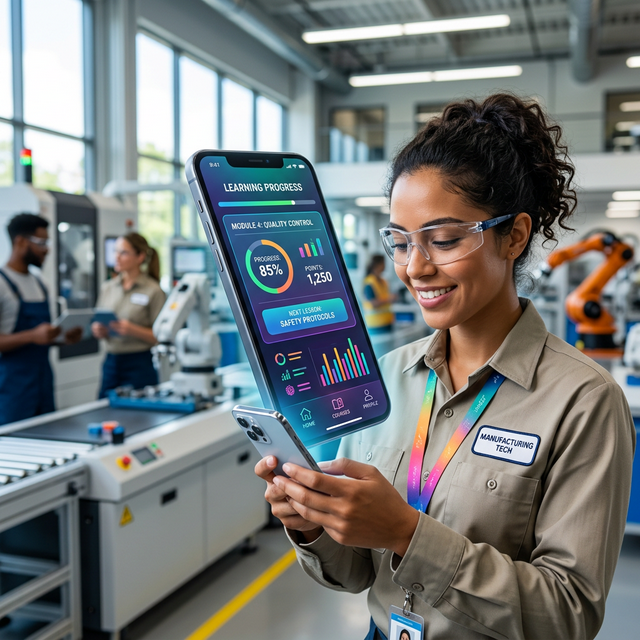
Roughly 80% of the global workforce — about 2.7 billion people — don't sit at desks. They work on factory floors, in retail stores, across logistics hubs, and at client sites. Yet most training platforms are still designed for people with laptops, corporate email, and blocks of free time.
If you're searching for the best microlearning platforms for frontline workers, you've probably already discovered the problem: most "mobile-first" tools still require app downloads, English fluency, and long onboarding cycles. Your workers don't have time for any of that.
This guide compares 10 microlearning platforms specifically suited for frontline and deskless workers. We'll cover what each one does well, where it falls short, and which type of team it fits best — so you can make a decision based on your actual workforce, not marketing promises.
What to Look for in a Frontline Microlearning Platform
Before comparing platforms, it helps to know what actually matters for frontline teams. These five criteria separate tools that work on factory floors from tools that work only in demo videos:
- No-app, no-login access: Your workers shouldn't need to download anything or remember credentials. If the tool requires an app store visit, you'll lose half your audience before training starts.
- Genuine mobile delivery: Not just a responsive website — actual push delivery to the device your workers already use every day (WhatsApp, SMS, or a lightweight mobile interface).
- Multilingual content support: If your workforce speaks Tamil, Hindi, Marathi, or Bahasa, the platform needs to deliver content in those languages — not just translate the menu buttons.
- AI-assisted content creation: You don't have an instructional design team of 20. The platform should help you turn existing PDFs, SOPs, and manuals into short training modules without months of development.
- Analytics that track real completion: Not just "logins" — actual module completion, quiz scores, and certification tracking your compliance team can use for audits.
The 10 Platforms Compared
1. Axonify
Best for: Large North American retail and grocery chains with existing L&D infrastructure.
Axonify delivers daily microlearning bursts with spaced repetition and gamification. It has strong analytics and over 800 ready-to-use training topics for sectors like retail, healthcare, and logistics. The adaptive learning engine personalizes content to individual knowledge gaps.
Pros: Proven ROI in large retail deployments. Strong spaced repetition engine. Good analytics dashboard.
Cons: Pricing designed for large US enterprises — often prohibitive for mid-size companies. English-centric. Requires app download. Limited vernacular language support for emerging markets.
2. 7taps
Best for: L&D teams that need to create microlearning content fast, especially for knowledge workers and mixed teams.
7taps is a rapid authoring tool that lets you create mobile-friendly micro-courses in minutes. Content is shared via links or QR codes — no app needed. It has a strong text-to-video feature available in over 40 languages.
Pros: Extremely fast content creation. No app requirement for learners. Good for Fortune 500 teams that need speed.
Cons: No native WhatsApp integration — relies on links. Limited analytics compared to full platforms. Better suited for content creation than end-to-end frontline training management.
3. SC Training (formerly EdApp)
Best for: SMEs and mid-size companies looking for a free-to-start microlearning platform with a template library.
SC Training offers mobile-first microlessons with gamification, push notifications, and a built-in content library. It has a generous free plan and supports quick course creation through templates.
Pros: Free plan available. Large template library. Good push notification system for reminders.
Cons: Advanced features need paid tiers. Limited Indian language support. Analytics can be basic on lower plans. Still requires app download for best experience.
4. eduMe
Best for: Companies with gig workers, delivery fleets, or customer-facing teams who need video-first onboarding.
eduMe focuses on mobile-based training with social-media-style vertical videos, role-play training, and workflow integrations with tools like Microsoft Teams and Workday. It's particularly strong for onboarding.
Pros: Video-first approach feels natural to younger workers. Good workflow integrations. Strong onboarding features.
Cons: Custom pricing makes budgeting difficult. Less suited for compliance-heavy industries. No WhatsApp-native delivery.
5. YOOBIC
Best for: Retail operations teams that need training, task management, and internal communication in one tool.
YOOBIC combines microlearning with task management and store communications. Its NEO AI suite helps create content, assessments, and interactive checklists. Strong for retail operational consistency.
Pros: Combines training with daily task management. Good for retail store compliance. AI content creation tools.
Cons: Retail-focused — limited fit for manufacturing or logistics. Requires app download. Pricing is enterprise-grade.
6. Leap10x
Best for: WhatsApp-first delivery for frontline teams in India, Southeast Asia, and GCC countries who need training in local languages.
Leap10x delivers microlearning directly through WhatsApp — the channel 2.7 billion people already use daily. Workers don't download an app, create an account, or remember a password. Content is generated using AI from existing PDFs and SOPs, and is available in 15+ Indian and regional languages. Companies like Siemens and Tata Electronics use Leap10x for factory floor training.
Pros: WhatsApp-native delivery — no app, no login. AI converts existing documents into micro-courses. 15+ vernacular languages. Designed for emerging market pricing. Real completion tracking for audits.
Cons: Best suited for markets where WhatsApp is dominant. Less established in North American market. Visual customization is more limited than web-based platforms.
7. MobieTrain
Best for: European retail and hospitality chains looking for gamified frontline training.
MobieTrain delivers bite-sized, gamified training with quizzes, challenges, and leaderboards. It's built for deskless and customer-facing staff with manager-facing performance tracking.
Pros: Strong gamification. Good for European multi-country deployments. Manager dashboards.
Cons: Limited presence in India and Asia. Requires app download. Pricing not transparent.
8. TalentCards
Best for: Teams that want ultra-simple flashcard-style training for very short (2–5 minute) learning sessions.
TalentCards turns training into digital flashcards that workers swipe through on their phones. It supports offline access and over 20 languages. AI-based course generation is available.
Pros: Extremely simple to use. Offline access. Affordable pricing. Quick to deploy.
Cons: Limited content format — flashcards work for basic knowledge but not complex skills. Analytics are basic. No WhatsApp integration.
9. Master-O
Best for: Sales teams in India that need gamified product knowledge and selling skills training.
Master-O focuses on transforming existing content into gamified, bite-sized lessons for frontline sales teams. It's popular for sales enablement in pharma, BFSI, and automobile sectors in India.
Pros: India-focused. Strong gamification for sales teams. Can repurpose existing content.
Cons: Heavily sales-focused — limited for safety, compliance, or operational training. Requires app. Less suited for non-sales frontline roles.
10. OttoLearn
Best for: Organizations focused on long-term knowledge retention through adaptive, spaced repetition.
OttoLearn uses gamified microlearning with an emphasis on spaced repetition to close knowledge gaps over time. The platform has a customizable analytics dashboard for tracking individual progress.
Pros: Strong adaptive learning engine. Research-backed spaced repetition. Good analytics.
Cons: Pricing starts at $250/month — can add up. Not frontline-specific by design. No regional language support for India/Asia. Requires app.
Feature Comparison Table
| Feature | Axonify | 7taps | SC Training | eduMe | YOOBIC | Leap10x | MobieTrain | TalentCards | Master-O | OttoLearn |
|---|---|---|---|---|---|---|---|---|---|---|
| No app required | No | Yes (links) | No | No | No | Yes (WhatsApp) | No | No | No | No |
| WhatsApp delivery | No | No | No | No | No | Yes (native) | No | No | No | No |
| Indian languages (5+) | No | Limited | No | No | No | Yes (15+) | No | Limited | Yes | No |
| AI content creation | Yes | Yes | Yes | Yes | Yes | Yes (from PDFs) | No | Yes | Yes | No |
| Free plan | No | Yes | Yes | No | No | Yes | No | Yes | No | No |
| Offline access | Yes | No | No | No | No | Yes (WhatsApp) | No | Yes | No | Yes |
| Compliance tracking | Yes | No | Basic | Basic | Yes | Yes | Basic | Basic | Basic | Yes |
| Best for India/Asia | No | No | No | No | No | Yes | No | Limited | Yes (sales) | No |
How to Choose: A Decision Framework
Choose based on your workforce reality, not feature lists.
- If your workers are in India, Southeast Asia, or GCC and primarily use WhatsApp: Leap10x is the most natural fit. No app download barrier. Content in local languages. Learn more about industries we serve →
- If you're a large North American retailer with existing L&D budget: Axonify has the deepest track record in that market.
- If you need to create content fast and share via links: 7taps is the fastest authoring tool available.
- If you need training + task management for retail stores: YOOBIC combines both in one platform.
- If you have a sales team in India needing gamified enablement: Master-O is purpose-built for that.
- If budget is tight and you want a free starting point: SC Training or TalentCards offer free plans to test with.
The right platform depends on three things: where your workers are (geography), what they already use (device and channel), and what you need to prove (compliance vs. skills vs. behavior change).
Compare pricing for your team size →
Try Leap10x for Frontline Training via WhatsApp
If your frontline workers are on WhatsApp — and most are — you can start a free pilot and see completion rates within the first week. No IT setup. No app rollout. Training goes where your workers already are.
FAQs
- Q: What is the best microlearning platform for frontline workers in 2026?
A: It depends on your workforce. For teams in India and emerging markets who use WhatsApp daily, Leap10x is purpose-built for that use case. For large North American retail chains, Axonify has the strongest track record. The best platform matches your workers' devices, languages, and daily habits — not the longest feature list. - Q: Do frontline workers need to download an app for microlearning?
A: Not always. Platforms like Leap10x deliver training directly through WhatsApp, which workers already have. 7taps uses shareable links. Most other platforms (Axonify, SC Training, YOOBIC, MobieTrain) require a dedicated app download, which can reduce adoption among workers unfamiliar with app stores. - Q: How much does a microlearning platform for frontline workers cost?
A: Pricing varies widely. SC Training and TalentCards offer free plans. OttoLearn starts at $250/month. Axonify and YOOBIC use enterprise custom pricing that can run into five figures annually. Leap10x offers emerging-market pricing designed for large frontline workforces where per-user costs need to stay low. - Q: Can microlearning platforms deliver training in Indian regional languages?
A: Only a few. Leap10x supports 15+ Indian and regional languages including Hindi, Tamil, Telugu, Marathi, Bengali, and Kannada. Master-O supports multiple Indian languages for sales content. Most global platforms (Axonify, SC Training, eduMe) are primarily English-focused with limited translation options. - Q: What's the difference between microlearning and a traditional LMS for frontline workers?
A: A traditional LMS requires login credentials, a web browser or dedicated app, and courses that take 30–60 minutes. Microlearning delivers 3–5 minute modules to devices workers already use. For frontline teams without laptops or corporate email, microlearning through channels like WhatsApp has significantly higher completion rates than LMS-based training.